B2B Salesforce dashboards
A 7-month project to redesign Salesforce dashboards for a B2B sales team—automating reporting, surfacing real-time performance data, and shifting a reactive client culture to a proactive one.
Industry
JPMorgan Chase
Timeline
7 weeks
Role
Lead designer
Team
Quad (product, tech, business)

Problem
Monthly reports were manually compiled, causing a 3-week lag in when the sales team would know if they hit their performance goals or if they had overdue client interactions.
Opportunity
Automate key reports so that the sales team would have accessible data throughout the month, allowing them to plan their client interactions weeks in advance.
Impact
$19k
Annual operational cost savings
456
Hours saved annually
99%
Reduction in reporting time
71%
Decrease in overdue meetings
Alignment
We needed to repair trust and convince the sales team that we could build them the right product
Tensions existed between the sales team and the product team before I joined because of miscommunications and a lack of clarity around product priorities. In a stakeholder workshop, we defined a shared mission, clarified roles and opened the door to consistent collaboration.
As a result, we gained direct access to users for research and validation, which was pivotal in designing a dashboard that actually solved user needs.

Discovery
Users didn't have real-time data to track their client interactions or monthly goals
To understand high-level pain points with the current Salesforce application, I ran a discovery workshop directly with the salespeople and support managers.
We learned that
The salespeople didn't have a reliable way to track client activities and next steps within the current setup.
The lack of real-time performance data forced salespeople to react to overdue tasks instead of proactively scheduling client interactions.

Working in the current instance of Salesforce does not provide us with a clear understanding of next steps to take for clients.
Client support manager
Delivery
I introduced the Salesforce design system to the tech team to improve build quality and consistency
The tech team was hardcoding HTML rather than leveraging the Salesforce Lightning Design System. By introducing the design system and reusable components, the team was able to build a dashboard that was consistent, customizable, and aligned with platform standards.
Result
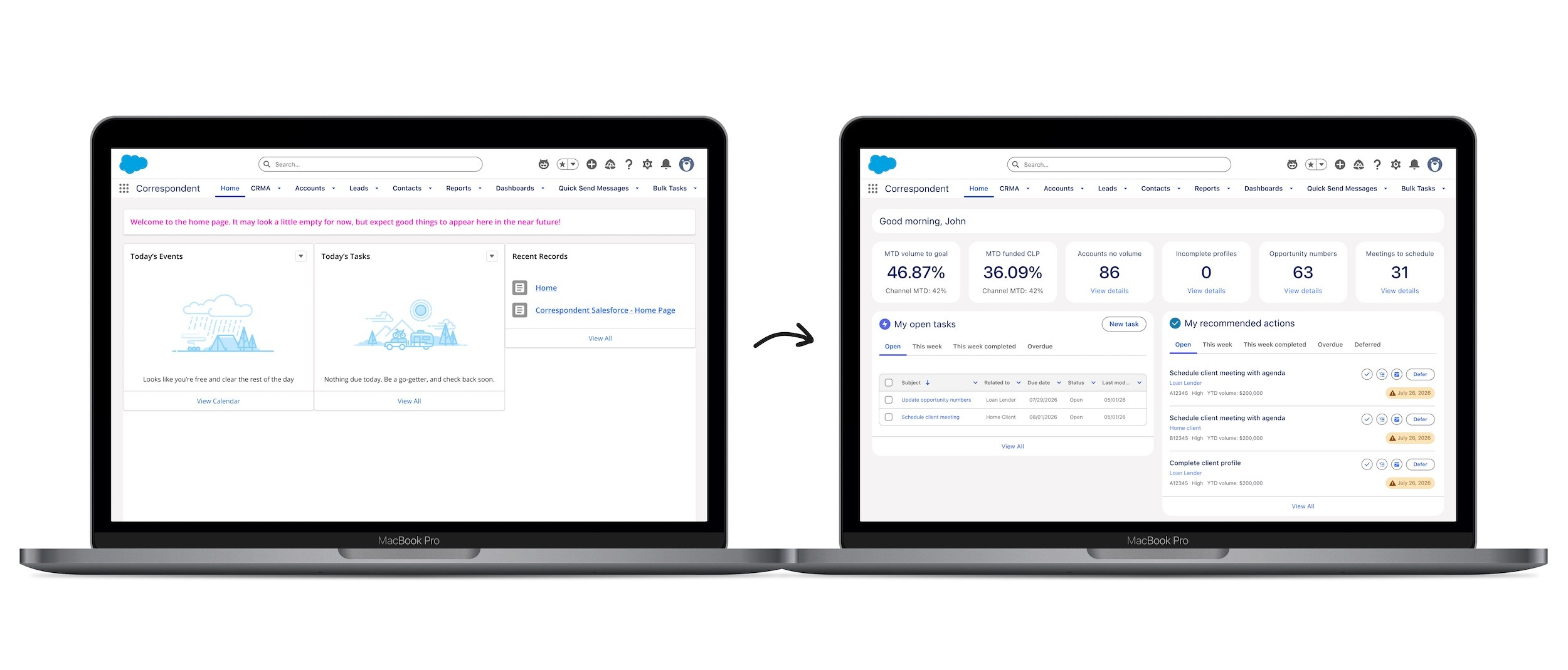
The final build was a self-directed dashboard with the sales team's full book-of business
Features like real-time performance metrics, open task tracking across 60 clients, recommended actions and proactive meeting views helped salespeople manage their own workload without waiting for management check-ins or manual reports.

Learnings
Everyone benefits from design
I spent most meetings explaining the rationale behind design decisions, leading to a better understanding of accessibility, hierarchy and components across the team.
Relationships are key
Creating trust and increasing transparency across the team was a soft skill that was a precondition for the success of the product.
Automation is just the beginning
Even though we didn't have the Salesforce AI license, learning about the platform helped me realize possibilities in agentic design and intelligent workflows.